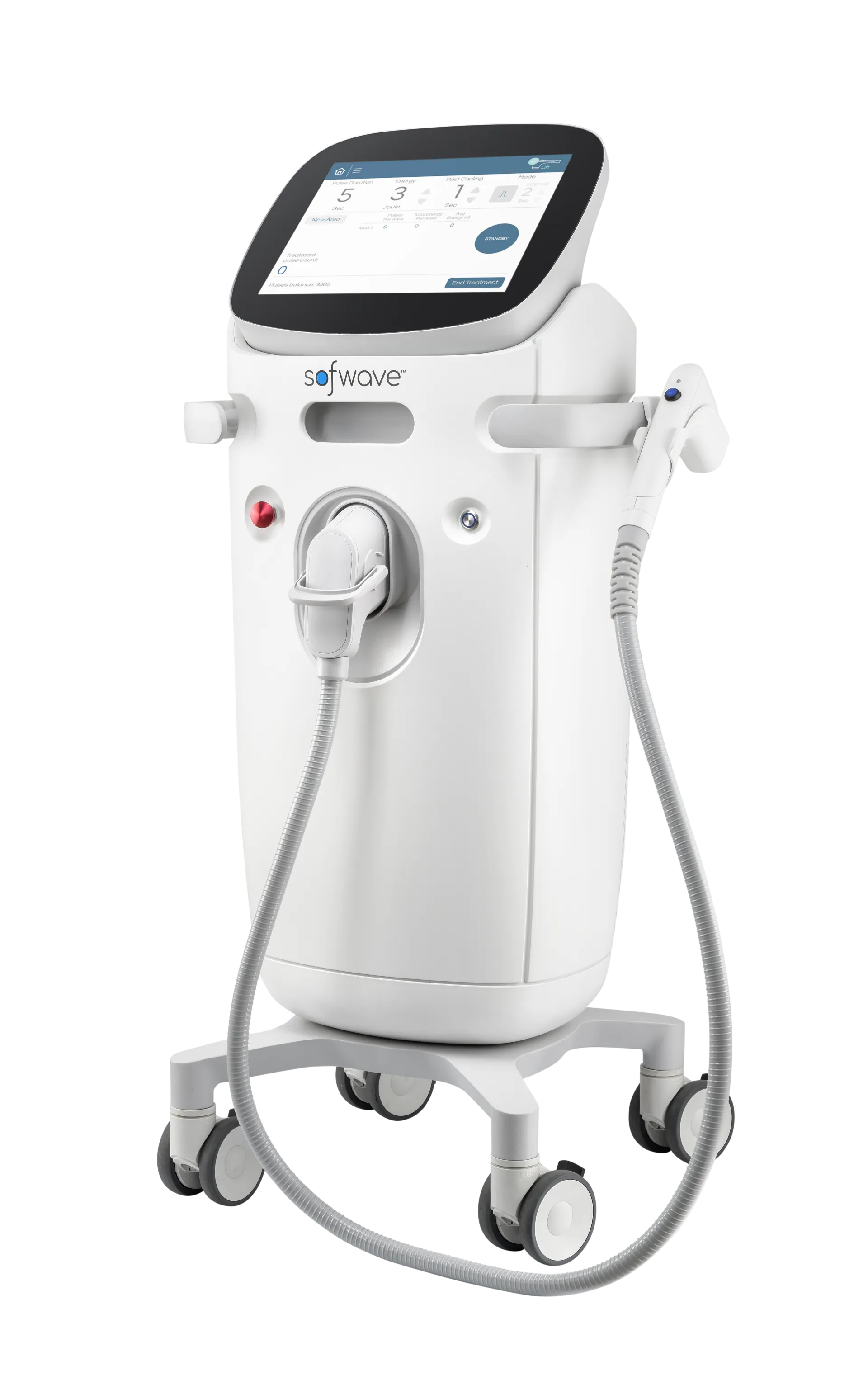
Sofwave Safety Profile and Regulatory Status
Sofwave received FDA 510(k) clearance in 2021 for lifting the eyebrow, submental, and neck tissue, as well as reducing fine lines and wrinkles. The Korean Ministry of Food and Drug Safety (KFDA) granted parallel clearance, confirming that the device meets rigorous safety standards in both Western and Asian regulatory frameworks. Clinical trials involving over 300 subjects demonstrated measurable improvement in skin laxity with no serious adverse events reported during 12-month follow-up periods.
The SUPERB (Synchronous Ultrasound Parallel Beam) technology operates at 1.5mm depth, specifically targeting the mid-dermis where collagen and elastin fibers are concentrated. Unlike older HIFU devices that penetrate to 3.0-4.5mm, Sofwave avoids the SMAS layer entirely. This shallower targeting reduces the risk of nerve irritation, fat atrophy, and deep tissue bruising that can occur with deeper energy delivery systems.
Common Side Effects and Their Duration
Immediate Reactions (0-24 Hours)
Redness affects approximately 80-90% of patients and typically resolves within 2-4 hours post-treatment. Mild swelling occurs in 30-40% of cases, concentrated around the periorbital and submental regions. A warm or tingling sensation persists for 1-2 hours after the session concludes. These reactions correlate directly with energy output per shot and the total number of shots delivered during treatment.
Short-Term Effects (1-7 Days)
Tenderness when touching treated areas affects roughly 15-25% of patients during days 1-3. This sensation resembles mild muscle soreness and requires no medication in most cases. Temporary skin dryness may appear between days 2-5 as the mid-dermis undergoes thermal remodeling. Applying a hyaluronic acid serum and ceramide moisturizer twice daily mitigates this effect effectively.
Contraindications and Risk Factors
Sofwave treatment is contraindicated for individuals with active skin infections, open wounds, or severe cystic acne in the target area. Patients with implanted electrical devices such as pacemakers or defibrillators should not undergo ultrasound-based treatments. Isotretinoin (Accutane) use within the preceding 6 months increases photosensitivity and healing variability, requiring clearance from a prescribing physician before proceeding.
Pregnancy and breastfeeding represent absolute contraindications due to insufficient safety data in these populations. Patients with a history of keloid scarring require careful assessment, though Sofwave's mid-dermal targeting at 1.5mm carries lower keloid risk than ablative procedures. Fitzpatrick skin types I through VI are all eligible for Sofwave treatment, making it one of the few energy devices safe across the full skin color spectrum.
Clinical Evidence Supporting Sofwave Safety
A prospective multicenter study published in 2022 evaluated 169 subjects receiving Sofwave for facial wrinkle reduction. At 12 weeks post-treatment, 72% of subjects showed measurable improvement on the Fitzpatrick Wrinkle Severity Scale with zero device-related serious adverse events. Persistent side effects beyond 7 days occurred in fewer than 2% of participants. Golbari NM et al. Dermatol Surg. 2022;48(8):869-873. doi:10.1097/dss.0000000000003512
The integrated Sofcool parallel cooling mechanism maintains epidermal temperature below 45 degrees Celsius during energy delivery. This real-time cooling reduces burn risk to near zero when the device is operated according to manufacturer protocols. Practitioners at RE:BERRY Gangnam follow standardized Sofwave protocols with calibrated energy parameters for each facial zone, ensuring consistent safety margins across all treatment sessions.
How to Verify Clinic and Practitioner Qualifications
Qualified Sofwave practitioners hold manufacturer certification confirming completion of device-specific training. In Korea, clinics must be registered medical institutions with physicians licensed by the Korean Medical Association. Patients should verify that the clinic uses a genuine Sofwave device with current calibration records, as counterfeit or modified ultrasound devices lack the safety controls built into authorized units. Asking to see the device serial number and maintenance log provides additional assurance of treatment safety and efficacy standards.